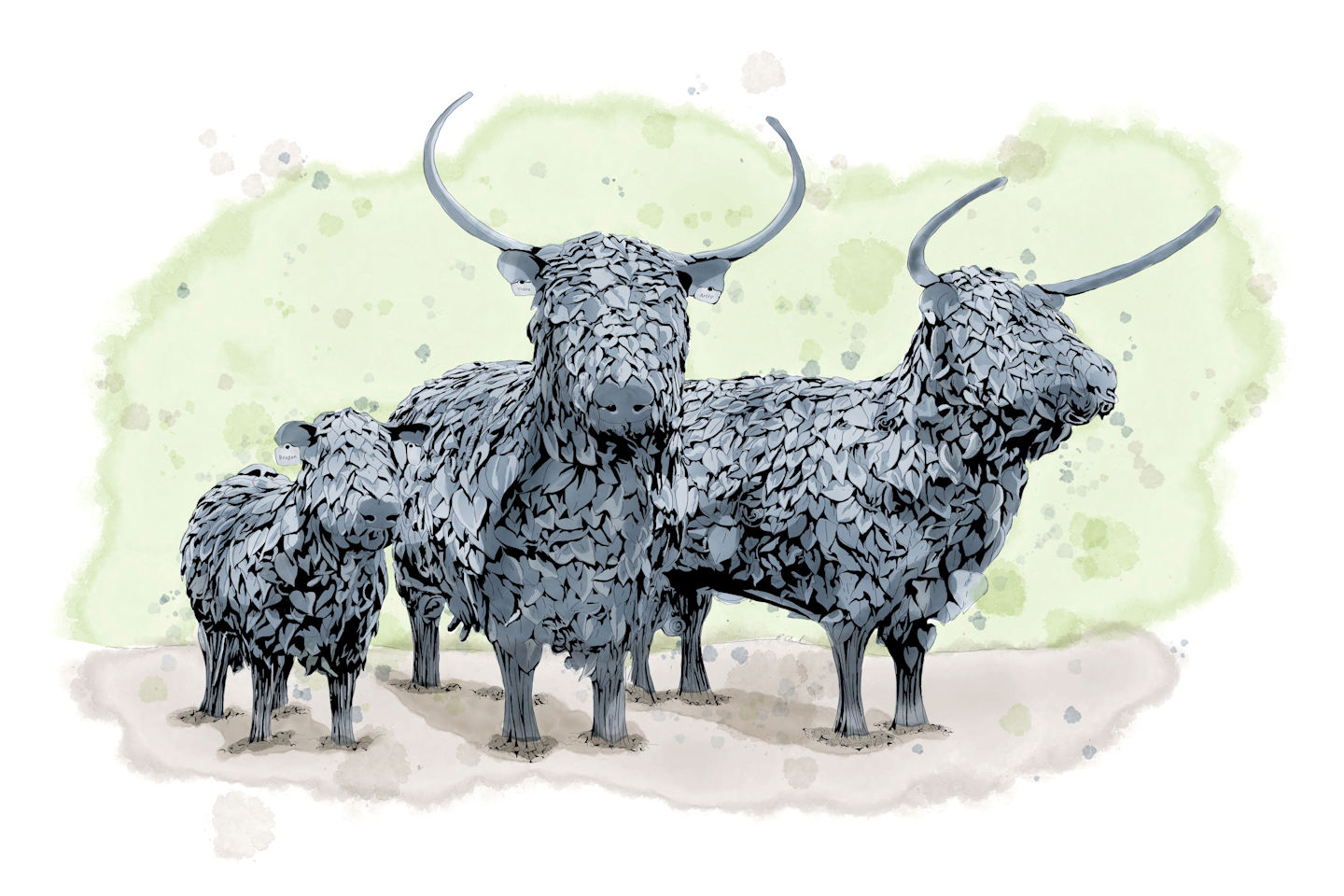
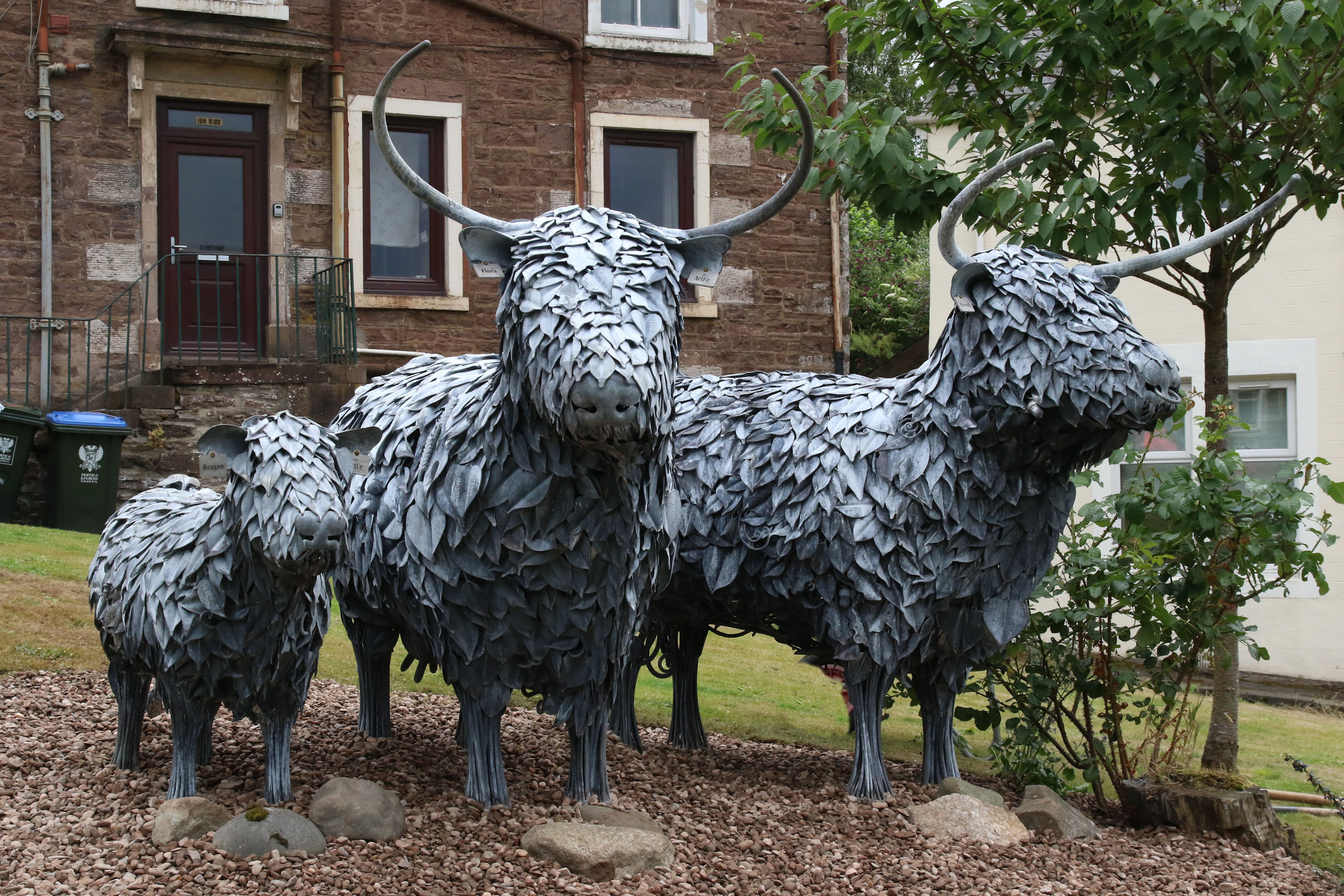
Highland Cattle – the ‘wealth of the mountains’
The cattle were mainly black, however they have also been documented as being brown, red, beige and brindle. The traveller and writer Dr Samuel Johnson wrote in 1773 that ‘The wealth of the mountains is cattle’ and Highlanders drove the cattle on the hoof to markets on the edge of the Highlands and sold them for cash. It was the main export from the Highlands. After the cattle had been bought at the market they were fattened in the Lowlands or in England and most of them would have been taken to be slaughtered. The beef was needed for the growing population of London and other cities and also for soldiers in the British Army. Droving really took off after the 1707 Act of Union led to more trade between Scotland and England.
The Drove
Cattle droves started from many points in the Highlands and the north of Scotland. They could take weeks before reaching the tryst or market in Crieff. The drovers would have a hard and treacherous journey by foot crossing rivers, tracks, marshes, mountain passes and moors. They had to be very careful as the cows needed looking after and a chance to graze en route. Also other Highlanders could ‘lift’ or take the cattle in the early days. Many of the droving routes funnelled down to Glen Lednock and from there went to Crieff via Comrie.
The Crieff Tryst
Crieff was chosen to be the market destination as it is between the Highlands and Lowlands on the edge of the Highland line. It was convenient for the drovers and the buyers from Lowland Scotland or England. Tens of thousands of cattle were sold each year in Crieff. Different cultures met at the Crieff Tryst and they each spoke different languages such as Scots, English and Gaelic. They also saw how each other lived. The main tryst took place at Michaelmas in late September and October. There were also smaller sales in August and September. In 1722 at least 30000 cattle were sold at Crieff, most of them to English buyers.
Times Change
In the late 18th century the main tryst and the bulk of the cattle trade moved from Crieff to Falkirk with up to 150,000 cattle being bought and sold there. Many of these cattle still passed through Crieff. The tryst moved to Falkirk because it was closer to Edinburgh and more convenient for English buyers. Droving eventually stopped by around 1900 because cattle could be transported more easily on railways and steamships. A one-off drove was recreated in 1981 and followed a popular and well-known route from Skye to Crieff, covering almost 200 miles. The drove took 6 weeks covering on average 12 miles a day. It was a slow process with the cattle travelling often in a bow formation and at a speed of 1.5mph.